Top 20 Ebooks for personal development and self-improvement
The only self-improvement books you'll ever require. 20 Ebooks for Just $9.99 - Limited Time Offer!
The essential guide to your personal growth.
18 Personal Growth Books to Read
Looking for self-improvement? These books come highly recommended by the author, Massimo Chieruzzi, and cover a variety of growth topics: motivation, building habits, productivity, philosophy, wealth, and more.
Highlighted Titles:
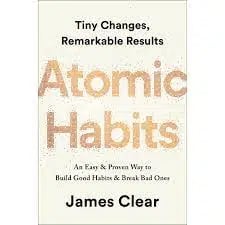
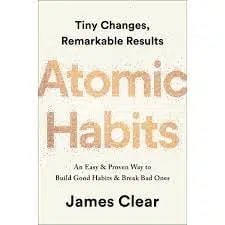
Atomic Habits by James Clear: A research-backed guide to changing your habits for good.
Feel Good Productivity by Ali Abdaal: Focuses on productivity through joy, not discipline.
How to be a Stoic by Massimo Pigliucci: Uses ancient Stoic philosophy for modern personal growth.
Think and Grow Rich by Napoleon Hill: Classic guide for mindset shifts and prosperity.
The 7 Habits of Highly Effective People by Stephen R. Covey: Timeless principles for effectiveness and success.
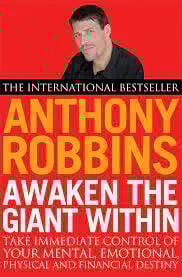
Awaken the Giant Within by Tony Robbins: Motivation and strategies for lifelong personal transformation.
How to Win Friends and Influence People by Dale Carnegie: Must-read for mastering relationships and communication.
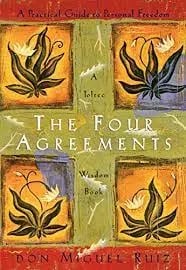
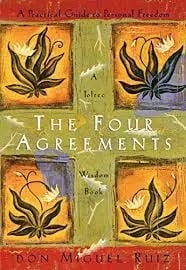
The Four Agreements by Don Miguel Ruiz: Four powerful principles for personal freedom and happiness.
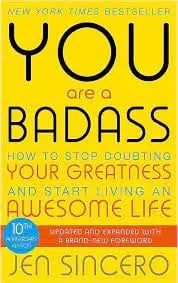
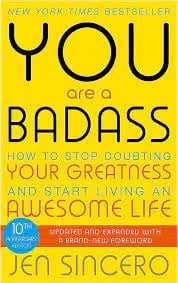
You Are a Badass by Jen Sincero: Practical and empowering advice for self-confidence.
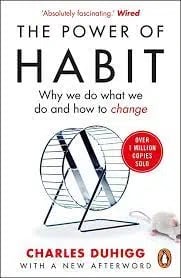
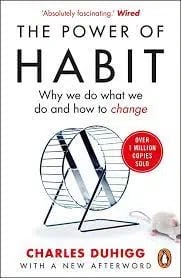
The Power of Habit by Charles Duhigg: Explains the science behind habit formation.
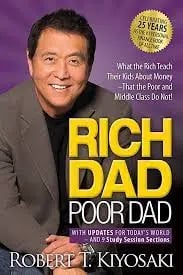
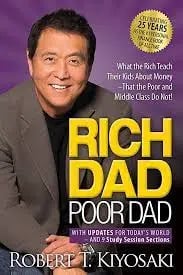
Rich Dad, Poor Dad by Robert T. Kiyosaki: Financial wisdom and the mindset behind wealth building.
Who Moved My Cheese? by Spencer Johnson: Adapting to change and finding new paths in life.
The Subtle Art of Not Giving a F*ck by Mark Manson: Prioritizing what really matters and letting go of excess worry.
Daring Greatly by Brené Brown: Embracing vulnerability for deeper growth.
The Gifts of Imperfection by Brené Brown: Accepting your authentic self and living wholeheartedly.
Thinking, Fast and Slow by Daniel Kahneman: A deep dive into how we think, judge, and make decisions.
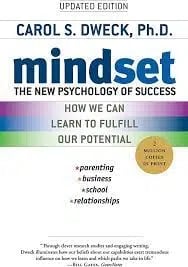
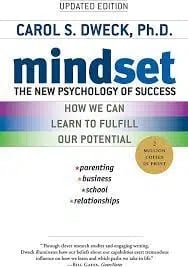
Mindset: The New Psychology of Success by Carol Dweck: Growing through challenges by adopting a growth mindset.
Final Thoughts:
Personal development is a journey and these books offer diverse perspectives and actionable steps. Reading them can inspire you to reflect, challenge yourself, and take action on your own growth.
Must read 18 Personal Growth Books to Read
Are Self-improvement books useful?
This is the question I get asked more frequently by personal growth enthusiasts and I want to address it right away to set expectations before you go through my list of the best self-improvement books.
Atomic Habits
“Atomic Habits” by James Clear is a profoundly insightful and transformative self help book that elegantly explores the intricate relationship between our habits and our identity. Clear’s pragmatic and research-backed approach offers a unique take on behavior modification, making it an invaluable resource for anyone seeking personal development.
The core of the book lies in Clear’s ‘Four Laws of Behavior Change’: Make it Obvious, Make it Attractive, Make it Easy, and Make it Satisfying. Clear elegantly breaks down the complexities of habit formation into these approachable components, providing us with an actionable framework to bring about positive change in our lives. This systematic approach feels incredibly empowering, turning habit change from a monumental task into a series of manageable steps.
Clear’s emphasis on tiny, incremental changes over time – the ‘atomic’ habits – is the real game-changer here. Rather than chasing monumental, overnight transformations, Clear promotes the idea of small, consistent improvements, painting a convincing picture of their long-term compounding effects. This is a refreshing and pragmatic departure from many personal development tropes.
Feel Good Productivity
I’m a big fan of author Ali Abdaal. He’s a successful Youtuber who left his job as a doctor to pursue a career as a content creator in the productivity space. I’ve been following his video content for years and ordered his book this December as soon as it was released.
He proves to be also a great book author. The content is really enjoyable and goes straight to the point while making everything very interesting, backing his productivity framework with a lot of scientific research.
The core message of his book is: “The secret to productivity isn’t discipline. It’s joy.”
He goes against the classic productivity content where everything is focused on becoming more disciplined, forming good habits, and, in the end, being able to deliver every task that is on your to-do list.
How to be a Stoic: Using ancient philosophy to live a modern life
I approached this book by philosophy professor Massimo Pigliucci with a bit of skepticism. While I’ve always been intrigued by the concept of stoicism, I was afraid the book would be boring and with very little actionability in today’s world, and be almost useless for my personal growth.
I was wrong.
The book is incredibly well-written and easy to read. It also finds a very good balance between narrating the historical side of the stoic philosophy and translating it to modern life. There are a lot of practical pieces of advice on how to be a stoic in 2024. That’s why even tho’ there’s a lot of philosophy involved, I had no hesitation in adding it to my list of personal growth books.
Think and Grow Rich
‘Think and Grow Rich‘ by Napoleon Hill remains an evergreen classic in self-help books. Written during the Great Depression, it provides insights and teachings that are timeless, relevant, and incredibly empowering.
Hill masterfully blends philosophy with actionable advice, urging readers to shift their mindset towards a more positive, prosperity-focused perspective. He theorizes that thoughts are powerful, influencing one’s life trajectory significantly. The overarching theme – wealth as the natural result of cultivating a certain mindset and adhering to specific principles – is profoundly impactful.
The book is organized into 13 steps, each discussing different aspects such as desire, faith, autosuggestion, specialized knowledge, and more. These principles are brought to life through fascinating real-life examples and anecdotes. However, some may find Hill’s metaphysical musings challenging to grasp or apply concretely.
While this personal growth book does show its age, both in its language and occasional references, the fundamental wisdom it encapsulates remains untouched. One area that it lacks, due to its era of origin, is inclusivity. It largely reflects the perspectives and challenges of white men, potentially alienating diverse readers.
The 7 Habits of Highly Effective People
Stephen R. Covey’s “The 7 Habits of Highly Effective People” is an enduring classic in the realm of self-help books. Covey’s insightful blend of wisdom, practical advice, and timeless principles delivers a roadmap for personal effectiveness that is as relevant today as it was when first published.
The seven habits that Covey elucidates form a cohesive framework for personal and professional success. The habits progress logically, from mastering self (proactivity, goal-setting, prioritizing) to dealing with others (empathy, synergy, communication), and finally to self-improvement and growth (continuous learning). This approach underlines the importance of building a strong inner foundation before working on interpersonal relations.
Covey’s philosophies go beyond mere tips and tricks for productivity. Instead, he encourages a paradigm shift in how we perceive and interpret the world. This powerful perspective shift allows readers to see life and relationships through a new lens, offering a profound and lasting impact.
The ‘win-win’ mindset and ‘seek first to understand, then to be understood’ habit stand out for their transformative potential. They encourage empathy and balanced human interaction, which can significantly enhance personal and professional relationships.
One of the book’s greatest strengths is its universality. The principles Covey outlines are applicable across cultures and situations, making it a timeless guide for anyone seeking personal growth.
Awaken the Giant Within
Tony Robbins’ “Awaken the Giant Within” is one of the most impactful self-help books, an enthusiastic call to action for readers to seize control of their mental, emotional, physical, and financial destinies.
The book stands out with its compelling blend of theoretical insights and practical strategies. Robbins delves into the mechanics of personal change, explaining how our beliefs, values, and habitual patterns of thinking influence our lives. He convincingly argues that by mastering these aspects, we can trigger a profound transformation.
The strength of ‘Awaken the Giant Within’ lies in its application-focused approach. Robbins is a skillful motivator who excels in presenting complex psychological concepts in a digestible, user-friendly manner. His tools and techniques, such as Neuro-Linguistic Programming (NLP) and Emotional Freedom Techniques (EFT), provide concrete methods for readers to institute profound changes in their lives.
However, the book’s ambitious scope may also be its downfall for some readers. Covering a wide array of topics, from overcoming fears and phobias to cultivating fulfilling relationships, it can feel overwhelming. The pace of the narrative is intense, and Robbins’ enthusiasm, while infectious, can sometimes border on the aggressive.
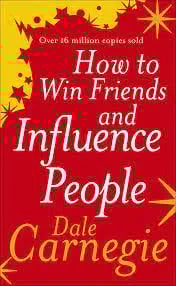
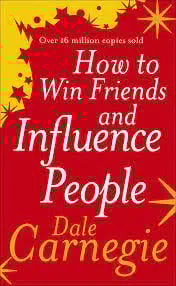
How to win friends and influence people
Dale Carnegie’s ‘How to Win Friends and Influence People‘ is a timeless classic in the realm of self-growth. Written in a clear, engaging style, it is one of my favorite self-help books as it provides invaluable insights into understanding and navigating human relationships.
Carnegie presents a set of simple, practical principles that enable effective communication and foster harmonious relationships. The book emphasizes the importance of empathy, active listening, and genuine interest in others. While these concepts may seem obvious, Carnegie’s articulation and real-life examples illuminate their profound impact.
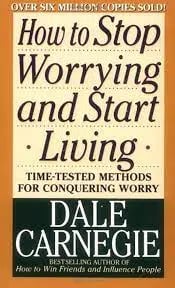
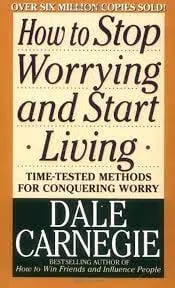
How to Stop Worrying and Start Living
In ‘How to Stop Worrying and Start Living’, Carnegie presents a practical, solution-focused approach to managing worry and anxiety. He offers a range of strategies, such as living in “day-tight compartments,” analyzing worries to understand their relevance, and accepting the worst-case scenario to reduce anxiety.
Carnegie complements these strategies with compelling anecdotes, making the advice relatable and memorable. However, it is essential to note that this book does not replace professional mental health advice, and those with severe anxiety may need additional resources.
One criticism is the book’s repetitiveness, which some may find redundant. Yet, others might argue that this aids in reinforcing and internalizing the concepts.
The Four Agreements
Don Miguel Ruiz’s “The Four Agreements” is a compelling exploration of Toltec wisdom that has secured its place as a modern spiritual classic. The book’s profound yet straightforward principles invite us to participate in transforming our lives by altering our mindset and perspective.
The four agreements that form the book’s cornerstone are: Be impeccable with your word, Don’t take anything personally, Don’t make assumptions, and Always do your best. These principles seem deceptively simple but have the potential to be life-altering when applied consistently.
Ruiz encourages the reader to scrutinize and break free from the limiting beliefs and societal ‘agreements’ that often stifle our true selves. This examination facilitates liberation from societal conditioning, opening pathways to personal freedom and authentic living.
The book’s standout aspect is its insightful blending of spirituality and practicality. Ruiz’s wisdom is not airy-fairy or inaccessible; instead, it is rooted in everyday experiences and realities. His discourse on each agreement is clear, concise, and resonates with intuitive truth.
A particular highlight is the principle of not taking anything personally. Ruiz emphasizes that people’s actions and words are more a reflection of their realities rather than yours. This understanding can bring a remarkable shift in one’s relationships and interactions with others, fostering emotional resilience.
You are a Badass
Jen Sincero’s “You Are a Badass: How to Stop Doubting Your Greatness and Start Living an Awesome Life” is a boisterous and empowering self-help book that has made a splash in the personal development genre. Sincero’s work stands out for its unique voice, combining humor, honesty, and boldness to deliver practical wisdom.
“You Are a Badass” demystifies the concept of self-improvement. Sincero approaches it with an unabashed candor and a refreshing lack of pretension, making personal growth accessible to everyone. She reframes our internal narratives about self-worth and success, encouraging us to shed self-doubt and embrace our inner ‘badass’.
One of the book’s key strengths is Sincero’s ability to blend personal anecdotes with actionable advice. Her experiences are relatable and her insights, practical. The combination of the two, peppered with humor, makes for a truly engaging read. You’ll find yourself laughing out loud one moment and deeply contemplating your life choices the next.
Particularly noteworthy is Sincero’s discourse on self-love and the law of attraction. Her ideas encourage readers to recognize their self-worth, tune into their desires, and manifest their aspirations. This sense of empowerment forms the core of “You Are a Badass”.
The Power of Habit
Charles Duhigg’s “The Power of Habit: Why We Do What We Do in Life and Business” is a gripping exploration of the science behind habit formation and reformation. The book stands as an influential guide in the realm of self-improvement, offering a compelling blend of scientific research, gripping narratives, and practical strategies.
“The Power of Habit” distinguishes itself by not just examining personal habits, but also delving into organizational and societal habits. This wide lens provides readers with a holistic understanding of how habits operate on multiple scales.
Duhigg presents a simple yet potent framework – the Habit Loop comprising of cue, routine, and reward – as the basis of all habits. This lucid breakdown of the mechanics of habit formation serves as the foundation for the book’s most impactful strategies.
A high point of the book is the concept of the ‘Keystone Habit’. Duhigg argues that changing one pivotal habit can set off a chain reaction, altering other habits in the process. This idea, backed by compelling examples, provides readers with a powerful strategy to initiate widespread change in their lives.
Moreover, the book is an engaging read. Duhigg’s storytelling prowess shines as he weaves fascinating narratives ranging from individual life stories to corporate case studies, holding readers’ interest while illuminating complex theories.
Rich Dad, Poor Dad
“Rich Dad Poor Dad” by Robert T. Kiyosaki has been a beacon for individuals looking to understand wealth-building principles since its publication. It juxtaposes the financial philosophies and practices of two influential figures in Kiyosaki’s life: his biological father (Poor Dad) and the father of his childhood best friend (Rich Dad). Through their contrasting approaches to money, career, and life, Kiyosaki paints a compelling picture of the mindset and habits needed to achieve financial independence.
A standout theme is the differentiation between assets and liabilities. Kiyosaki emphasizes that acquiring assets, which put money in one’s pocket, is key to generating wealth, while liabilities continuously drain one’s resources. This fundamental understanding challenges the traditional notion of considering items like one’s primary residence as an asset, urging readers to critically evaluate their spending habits.
Kiyosaki’s style is accessible and anecdotal, using stories from his upbringing to make financial concepts digestible. While this has made it a hit among many, it has also opened up the book to criticism. Detractors argue that the book lacks actionable steps, that its lessons are simplistic, or that Kiyosaki’s purported biography might be more fiction than fact.
Who moved my cheese?
“Who Moved My Cheese?” by Dr. Spencer Johnson is a motivational business fable that delves into the ways we deal with change in our lives. With its allegorical tale of mice and “little people” in a maze searching for cheese (symbolizing our desires or goals), the book offers a concise and memorable narrative about adaptability, courage, and the inevitability of change.
The story centers around four characters: Sniff, who detects change early; Scurry, who quickly adapts to change; Hem, who resists change; and Haw, who eventually learns to embrace it. Through their adventures and reactions to their ever-depleting cheese supply, readers are introduced to valuable lessons on how to confront and navigate the twists and turns of life.
Dr. Johnson’s genius lies in the simplicity of his storytelling. By crafting a tale that can be read in one sitting, he ensures that its core messages are not lost in complex jargon or superfluous details. The allegory, while straightforward, provides a mirror for readers to reflect on their reactions to changes in their personal and professional lives.
However, “Who Moved My Cheese?” is not without its critics. Some find the narrative too simplistic, arguing that real-world changes are multifaceted and cannot be navigated with mere positivity. Others feel the book tends to oversimplify the complexities of human emotion and resistance to change.
The subtle art of not giving a f*ck
Mark Manson’s “The Subtle Art of Not Giving a F*ck” serves as a refreshing slap in the face to the self-help genre. With a candid and irreverent tone, Manson challenges the rose-tinted optimism that floods the personal development arena, arguing that the pursuit of relentless positivity can often be more harmful than helpful.
Manson’s core premise revolves around the idea that we have a limited number of “f*cks” to give; therefore, we must choose wisely where to invest our energy and concern. Life, he postulates, is replete with suffering, setbacks, and disappointment, and the sooner we accept this, the better equipped we are to deal with life’s inherent challenges.
The book effectively dismantles the common misconceptions that happiness is a default state and that everyone is special. Manson posits that embracing our limitations, confronting uncomfortable truths, and understanding the value of suffering is key to living a grounded and authentic life.
Manson’s writing style is raw and unfiltered, filled with anecdotes and sharp humor. While this appeals to many, particularly those disenchanted with the glossy promises of traditional self-help, some readers might find his approach too abrasive or mistake his message as one of apathy. This, however, would be a misinterpretation. Manson does not advocate for indifference but rather for a more discerning, intentional approach to caring.
One of the book’s possible criticisms is its repetitive nature. Some readers might feel that its core message could be distilled into fewer pages. However, Manson’s varied examples and deeper dives into philosophy and personal experiences enrich the narrative.
Daring Greatly: How the Courage to Be Vulnerable Transforms the Way We Live, Love, Parent, and Lead
“Daring Greatly” by Dr. Brené Brown emerges as a powerful exploration of vulnerability and its pivotal role in building meaningful connections, fostering self-awareness, and achieving personal growth. Drawing from extensive research and her expertise in social work, Brown delves deep into the human psyche, challenging societal perceptions that often equate vulnerability with weakness.
Brown’s thesis is both revolutionary and deceptively simple: to truly engage with life, to love deeply, and to lead effectively, one must embrace vulnerability. It is in our moments of fear, uncertainty, and risk that the most profound transformations occur. By daring greatly, and stepping into the arena of life even when failure looms large, we not only enrich our own experiences but also inspire those around us.
The book is meticulously researched, blending empirical findings with relatable anecdotes. Brown’s candid revelations about her own struggles and moments of clarity are particularly illuminating, making the narrative both scholarly and deeply personal. Her exploration into the shields we use—like perfectionism, numbness, and foreboding joy—to protect ourselves from the perceived dangers of vulnerability offers readers tangible insights into their own behaviors.
However, the beauty of “Daring Greatly” is not just in its diagnosis of the human condition but in its actionable solutions. Brown provides practical advice on cultivating shame resilience, building deeper connections, and leading with authenticity.
One might argue that the concept of vulnerability, while profound, is not entirely new. However, it’s Brown’s nuanced understanding, her ability to articulate complex emotions and her call to the courage that sets the book apart.
The Gifts of Imperfection
In “The Gifts of Imperfection,” Brené Brown presents readers with a compassionate guide to embracing their authentic selves. The book, a synthesis of a decade’s worth of research on shame, worthiness, and authenticity, is a clarion call to recognize and celebrate our vulnerabilities and imperfections.
Brown’s approach is both holistic and heartfelt, offering “10 Guideposts” to wholehearted living. These guideposts, ranging from cultivating intuition and trusting faith to letting go of exhaustion as a status symbol, are not mere self-help directives but deeply researched insights into human behavior and societal pressures.
One of the strengths of this work is Brown’s willingness to be vulnerable. Her personal anecdotes resonate deeply, making the scientific aspects of the book more relatable. She speaks candidly of her own struggles, offering the reader solace in the shared human experience of imperfection. By doing so, she not only advocates for her thesis but embodies it.
Thinking Fast and Slow
“Thinking, Fast and Slow” stands as a monumental work in the realm of behavioral psychology and economics. Written by Nobel laureate Daniel Kahneman, the book delves into the intricate machinery of human thought, shedding light on the dual processes that drive our judgments and decisions.
Kahneman introduces readers to two systems of thinking: System 1 (Fast) and System 2 (Slow). System 1 operates automatically, quickly, and with little effort; it’s our intuitive and instinctual mode of thinking. In contrast, System 2 is deliberative, logical, and requires conscious effort. While both systems have their merits, Kahneman reveals how our reliance on the fast, intuitive System 1 can lead to systematic errors in judgment.
The brilliance of the book lies in its effective interweaving of rigorous scientific research with engaging anecdotes and thought experiments. Concepts like the anchoring effect, prospect theory, and loss aversion are elucidated not just theoretically, but with real-world examples that make the content relatable and enlightening.
Kahneman also shines a light on the various biases and heuristics that often subconsciously influence our decisions, ranging from the overconfidence bias to the availability heuristic. By doing so, he equips readers with a better understanding of their cognitive pitfalls, making them more informed decision-makers.
However, “Thinking, Fast and Slow” is not a light read. Its depth and breadth demand attention and contemplation. While this speaks to the book’s comprehensive nature, it might be daunting for those expecting a breezy introduction to behavioral economics.
Mindset: The New Psychology of Success
“Mindset: The New Psychology of Success” by Dr. Carol S. Dweck is a transformative exploration into the profound impact of our beliefs on our life outcomes. Drawing from decades of research in developmental psychology, Dweck delineates two primary mindsets: the fixed mindset and the growth mindset.
At its core, the fixed mindset is the belief that our abilities and traits are static and immutable. Those with a fixed mindset might view challenges as threats, avoid difficult tasks, and often feel threatened by others’ success. Contrastingly, the growth mindset revolves around the belief that abilities can be developed through dedication, effort, and resilience. Individuals with this mindset view challenges as opportunities and are less likely to be deterred by setbacks.
Dweck’s exploration of these mindsets is both thorough and compelling. Through an array of studies and anecdotes, she demonstrates how these beliefs manifest in various areas of life, from education and sports to business and relationships. The revelations about how praise can inadvertently foster a fixed mindset in children, or how businesses can stifle innovation with the wrong cultural mindset are particularly eye-opening.
The strength of “Mindset” lies not only in its diagnostic prowess but also in its prescriptive solutions. Dweck provides actionable advice on cultivating a growth mindset, ensuring that the book isn’t just a theoretical exposition but a practical guide.
However, some critics argue that Dweck’s dichotomy oversimplifies the complexity of human belief systems. While the fixed vs. growth framework is useful, human psychology is multifaceted, and placing individuals neatly into one category or the other can seem reductive.
Exclusive Offer
Grab your chance to own the best ebooks of the century at an unbeatable price today!


Limited Time
Don't miss out on this exclusive deal for the century's top ebooks, available now!
Explore a curated selection of timeless classics and modern masterpieces in one place.
Top Picks


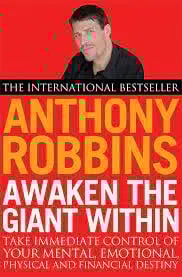
Incredible selection of ebooks at an unbeatable price! Highly recommend Freebook.
Alex B.


★★★★★